New effective date in policy change must be within the same slice and policy term
When editing the effective date of a policy change, the new effective date must not cross any slice boundaries. That is, the new effective date must not cross over the effective date of any other transactions. It must also be within the same policy term.
For more information about slices, see Slice mode and window mode overview.
Example that does not cross slice boundaries
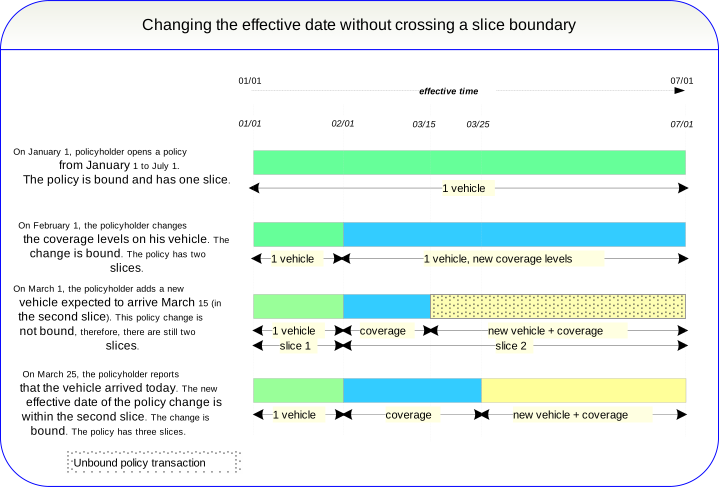
The following example of a change to the effective date does not cross slice boundaries.
- The agent creates a new personal auto policy with one vehicle. The policy has a six month term from January 1 until July 1. The policy has one slice from January 1 until July 1.
- On February 1, the policyholder calls to change the coverage levels on his vehicle. The effective date of the policy change is February 1. The agent binds the policy change. The policy now has two slices. The first slice is from January 1 to January 31. The second slice is from February 1 to July 1.
- On March 1, the policyholder calls to say that he is buying a new vehicle. He expects to receive the vehicle on March 15 (in the second slice). He wants to know the cost of adding the vehicle to his policy. The agent starts a policy change with the expected delivery date. The agent gives the policyholder a quote. The agent tells the policyholder to call with the vehicle identification number (VIN) once he has actually received the vehicle. The VIN is required to bind the policy change. The policy change is quoted but not bound. The policy still has two slices.
- The policyholder calls on March 25, saying that he has received the vehicle. The agent adds the VIN and changes the effective date of the policy change to March 25. This change to the effective date is allowed because the date is within the second slice. The agent binds the change.
The following illustration shows the slice boundaries in this example.
Example that crosses slice boundaries
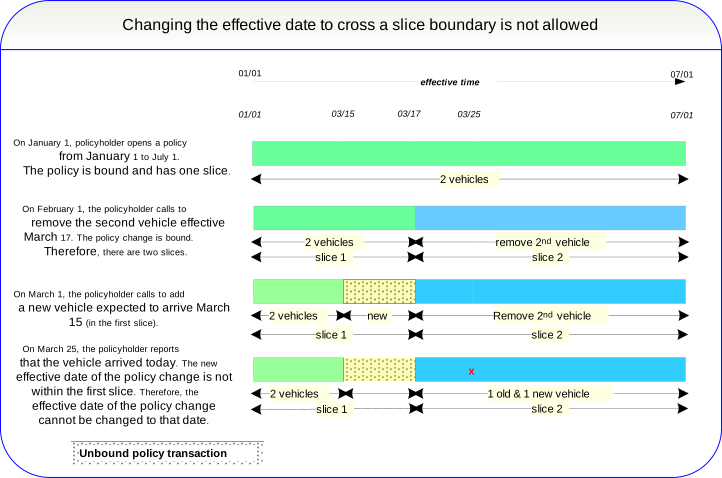
The following example crosses slice boundaries. Therefore, it is not allowed.
- The agent creates a new personal auto policy with two vehicles. The policyholder is the primary driver of the first vehicle, and his wife is the primary driver of the second. The policy has a six month term from January 1 until July 1.
- The policyholder calls on February 1 to report that the lease on the second vehicle expires on March 17. He is not going to renew the lease. The agent starts and binds a policy change. The policy has two slices. The first slice is from January 1 through March 16. The second slice extends from March 17 through July 01.
- On March 1, the policyholder calls and says that he is buying a new vehicle. He expects the vehicle to arrive on March 15. He wants to know the cost of adding it to his policy. His wife will be the primary driver of the new vehicle.
- The agent starts a policy change with the expected delivery date. The agent gives the policyholder a quote. The agent tells policyholder to call back with the VIN once he has actually received the car. The VIN is required to bind the policy change. The policy change is within the first slice. The policy change is quoted but not bound. Because the policy change is not bound, the policy still has two slices.
- The policyholder calls on March 25, and says he has received the vehicle and has the VIN. The effective date of the policy change is not within the first slice. Therefore, the effective date of the policy change cannot be changed to that date. The agent must withdraw the current policy change and start a new one with the same information.
The following illustration shows the slice boundaries in this example.